Step-by-Step Guide to Packing Fragile Items for UK Moves
Fragile items are the ones that make even an organised move feel slightly tense. A chipped glass, a cracked plate, a broken lamp base, or a shattered photo frame can turn moving day from manageable to miserable in seconds. That is why a proper step-by-step guide to packing fragile items for UK moves matters: it helps you protect what is breakable, reduce stress, and avoid the kind of damage that is often completely preventable.
Whether you are moving across town or planning a full house move, the principles are the same: use the right materials, pack methodically, label clearly, and keep weight under control. In this guide, you will find a practical method that works for everyday household items, from glassware and crockery to mirrors, ornaments, electronics, and sentimental pieces that simply cannot be replaced.
If you want extra support while preparing for moving day, it can also be worth looking at packing and unpacking services, especially if you are juggling work, children, or a tight schedule. And if your move is part of a wider relocation, pages such as home moves, house removals, or removals can help you compare the practical options available.
Quick takeaway: fragile packing is less about using mountains of paper and more about creating structure, cushioning, and separation. The best-packed box is one that survives bumps, stacking, and the odd sharp stop on a UK road without the contents shifting around like loose change in a pocket.
Why Step-by-Step Guide to Packing Fragile Items for UK Moves Matters
Packing fragile items properly is not just about avoiding broken plates. It affects the pace of the whole move, the safety of the people carrying boxes, and your confidence when everything is being loaded into a van. A poorly packed box can collapse under its own weight, shift during transport, or split when lifted by the bottom. Once that happens, the damage is usually immediate and expensive in one way or another.
UK moves can bring their own quirks too. Think narrow stairwells in older properties, awkward parking, drizzle on moving day, and frequent short loading windows. If a box is underpacked, overpacked, or badly labelled, those conditions make matters worse. A single box of glassware can quickly become a problem for the whole team if it is heavy, unstable, or not clearly identified.
There is also the emotional side. Not everything fragile is expensive, but some items carry huge personal value. Family china, a wedding gift, a child's first ceramic ornament, or a framed print from a holiday can be irreplaceable in practice even if the item itself is modest. That is why careful packing is best treated as part of the move, not as a last-minute chore.
If you are comparing moving support, it may help to review a trusted removal company or check whether a man with a van setup suits a smaller load. In many moves, the right service choice matters as much as the packing itself.
How Step-by-Step Guide to Packing Fragile Items for UK Moves Works
The basic method is simple, but each part serves a purpose. You start by sorting fragile items by type and fragility. Then you choose the right box sizes and cushioning materials. After that, you wrap each item individually, fill voids so nothing can move, close the box securely, and label it in a way that leaves no doubt about what is inside and how it should be handled.
That sounds straightforward, but the details matter. A double-walled box behaves very differently from a supermarket box. A mug wrapped in a single sheet of newspaper is not the same as a mug cushioned on all sides and packed upright. The goal is not just to hide the contents; it is to create a small protected environment inside the box.
Good packing also follows a hierarchy of risk. The most fragile items get wrapped first and packed with the most support. Heavier items go at the bottom if they are suitable for that position. Very delicate items should not sit under a pile of mixed objects. Once the box is full, it should feel snug, not loose. If you gently shake it and hear movement, the packing is not finished.
Many people find this stage easier when they are already using broader moving help such as man and van or house movers. The packing method stays the same, but the logistics become easier when the transport side is organised.
Key Benefits and Practical Advantages
Done well, fragile packing saves more than breakages. It saves time on moving day because each box is easy to identify and stack. It also makes unpacking calmer, because the boxes can be opened in a sensible order rather than as one giant mixed pile.
Some of the most useful advantages are practical rather than dramatic:
- Less damage risk: Proper cushioning absorbs vibration and minor knocks.
- Faster handling: Clearly labelled boxes help movers know what needs care.
- Better stacking: Well-built boxes are easier to place safely in a van.
- Reduced stress: You are not guessing what survived until the end of the journey.
- Cleaner unpacking: Items grouped by room or category are simpler to put away.
There is also a money angle, though it is worth being sensible about it. Spending a little on correct packing materials usually costs less than replacing broken items. For a clearer idea of what services may cost in the wider move, you can check pricing and quotes and compare your moving plan with the actual support you need.
For environmentally minded movers, using reusable blankets, recyclable paper, and sensible box reuse can also support a lower-waste move. If that matters to you, the site's recycling and sustainability page is a useful next stop.
Who This Is For and When It Makes Sense
This guide is useful for almost anyone moving home in the UK, but it is especially relevant if you have:
- glassware, crystal, or stemware
- ceramic plates, bowls, or serving dishes
- mirrors, picture frames, or artwork
- table lamps, lampshades, or decorative pieces
- small appliances with delicate parts
- computer equipment or accessories
- sentimental items that you cannot easily replace
It also makes sense if your move is complicated by time pressure. A lot of families begin packing fragile items after everything else is already under way, which is backwards in practice. Fragile items deserve early attention because they often take longer than expected. The wrapping, sorting, and box-building stage is fiddly. To be fair, nobody ever says, "I'll do the glassware first" with great enthusiasm, but that is usually the smart move.
Small flat moves, student moves, business relocations, and larger family moves all benefit from the same basic principles. If you are moving a smaller load or one or two bulky pieces, a moving van or removals van may be enough. If you are moving a full household, a bigger setup such as moving truck or removal truck hire may be more suitable.
Step-by-Step Guidance
1. Sort fragile items before you pack anything
Start by creating separate piles for glass, ceramics, decor, pictures, and electronics. This prevents mixed boxes, which are one of the biggest causes of movement and damage. A glass tumbler does not belong in the same box as a lamp base unless you want a very busy unpacking session later.
At this stage, remove anything that does not need to be moved. Duplicate mugs, chipped plates, old frames, and unnecessary decorative clutter can often be sold, donated, or recycled. If you are clearing space as part of the move, a page like furniture pick up may be useful for items leaving the property.
2. Gather the right materials
Use sturdy small or medium boxes, packing paper, bubble wrap, tape, markers, and, where needed, cardboard dividers. Avoid oversized boxes for heavy fragile contents. A large box filled with plates becomes difficult to lift and much more likely to fail at the base. Small boxes are not glamorous, but they are sensible.
If you want a professional finish, especially for larger or high-value moves, consider support from packing and unpacking services. That can be a practical option for busy households, downsizers, or anyone who wants less risk and less effort.
3. Prepare the box properly
Tape the bottom seam securely and add a layer of cushioning inside the box before anything else goes in. This creates impact absorption if the box is set down harder than expected. Then check the box for stiffness. If the cardboard feels soft, damp, or previously damaged, use another one.
When in doubt, choose a smaller, stronger box. It is easier to carry and less likely to buckle.
4. Wrap every item individually
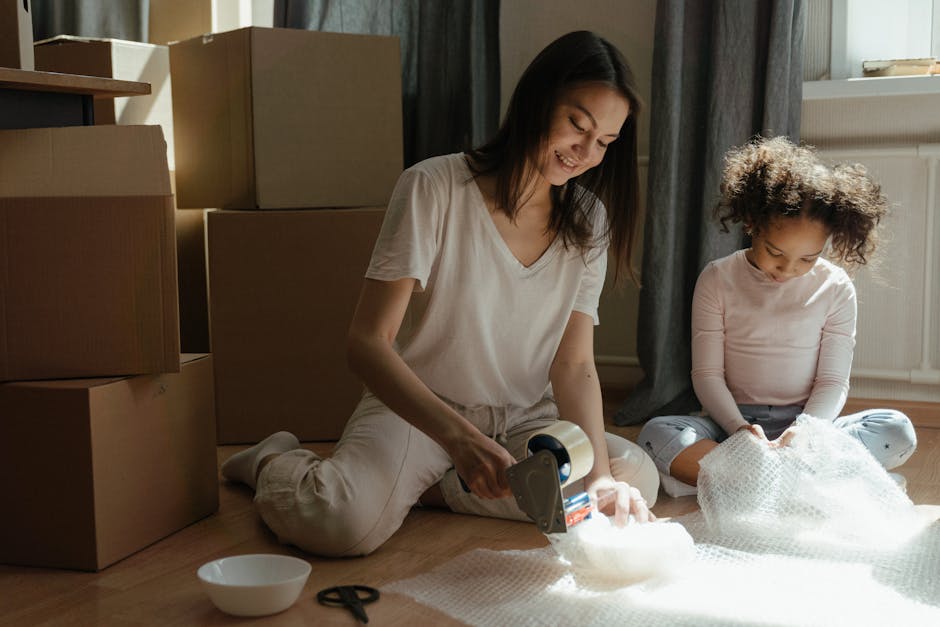
Each item should be wrapped on its own, even if the items seem similar. Plates should not rub together. Glasses should not knock against each other. Ornaments should not be loose inside the box. Use enough paper or bubble wrap to cover corners, handles, rims, and any protruding detail.
For glasses and stemware, wrap the stem carefully and then the bowl. For ceramics, protect edges first because that is where chips usually happen. For framed items, add corner protection and use flat packing where possible.
5. Pack by weight and shape
Place heavier items at the bottom only when they are structurally suitable, then add lighter, more delicate items above or beside them with suitable padding. Keep similar items together to reduce pressure points. Round objects, awkward handles, and fragile lids need extra void filling so they do not wobble.
One common rule helps here: if an item can move, it can break. The movement does not need to be dramatic; even a few millimetres of sliding can be enough over the course of a van journey.
6. Fill all gaps so nothing shifts
Use scrunched paper, foam, towels, or soft packing material to remove empty space. The box should feel snug from every angle, but not crushed. When closed, contents should stay in place if you gently tip the box a little. If you can hear a "clink," there is still work to do.
7. Seal and label clearly
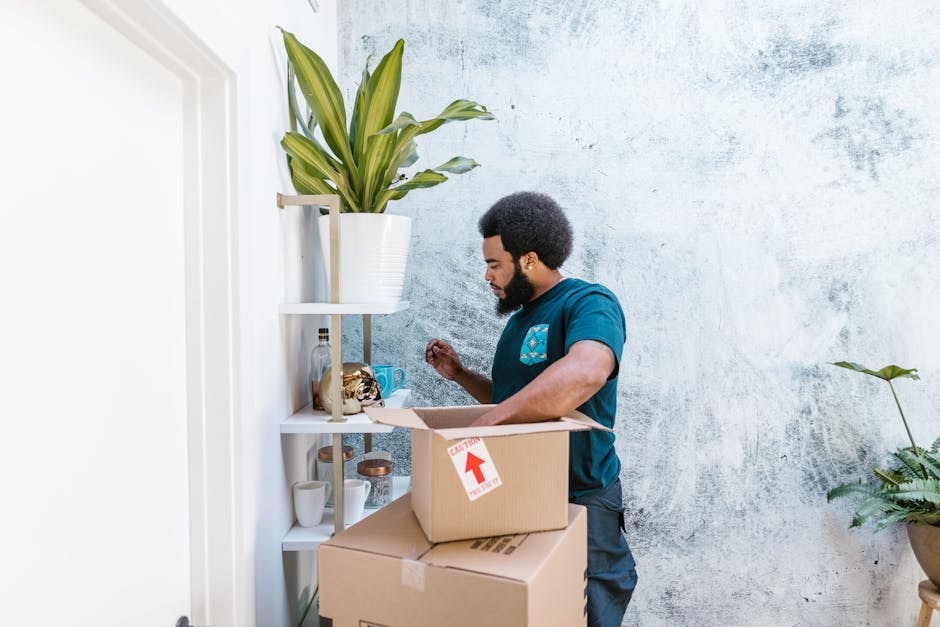
Seal the box across the centre seam and edges with strong tape. Then label it on the top and at least one side. Write what the contents are and what the box needs: "Fragile", "This Way Up", "Glassware", or "Open First". Make the labels large enough to read quickly during the move.
This is particularly useful if your move involves several hands, as with a removal van load or a team of movers. The clearer the label, the easier it is to place the box in the right part of the vehicle.
8. Keep fragile boxes in the safest loading position
During transport, fragile boxes should be kept where they are less likely to be crushed. That usually means on top of sturdier items and away from heavy furniture edges. They should not be used as filler spaces, and they should not be buried under awkwardly shaped items.
If you are hiring a vehicle or team, discuss this before the move. Whether you are using man with van, man with van removal, or a more complete removal services package, fragile items should be handled as a separate category.
Expert Tips for Better Results
Experienced movers tend to focus on stability, not just cushioning. That means building a box that has very little movement inside it and enough strength to survive stacking. A few practical habits make a noticeable difference.
- Pack less per box: Smaller loads are safer and easier to carry.
- Use paper for separation: Paper works well between plates and around delicate edges.
- Protect corners first: Corners are usually the first contact point when a box shifts.
- Balance weight carefully: Do not put all the heavy items into one container.
- Double-check the base: Most packing failures happen from the bottom, not the top.
- Prepare an essentials box separately: You do not want to unwrap six boxes just to find a teapot.
For mirrors and artwork, use a layer of cardboard or a purpose-made sleeve before wrapping. For electronics, keep cables together, photograph the setup before disconnecting, and pack accessories in clearly marked pouches. If something has a cable, a plug, and a tiny adaptor, there is a strong chance it will otherwise disappear into the moving abyss.
When planning a wider move, services such as house removalists and house removals can be especially helpful if you need both protection and coordination on the day.
Common Mistakes to Avoid
The most common packing mistakes are not complicated; they are just easy to repeat under pressure. The good news is that they are all avoidable once you know what to look for.
- Using boxes that are too large: Big boxes encourage overpacking and make fragile items harder to control.
- Leaving empty space: Loose contents move, strike each other, and crack.
- Packing mixed heavy and light items together: Weight pressure can crush lighter items.
- Not taping the bottom properly: This is how many spills and breakages begin.
- Forgetting labels: If nobody knows what is fragile, nobody can handle it with care.
- Using thin recycled boxes in poor condition: Good intentions do not strengthen weak cardboard.
- Stacking fragile boxes under furniture: That is a recipe for pressure damage.
Another frequent issue is rushing the process the night before the move. Under time pressure, people wrap too lightly, reuse the wrong box, or throw half-padded items together because they "look fine." They may look fine. They may not arrive fine. Those are different things.
If you are working to a tight deadline, it may be worth speaking to a removal company early and checking whether local support through removals near me could reduce the load on you.
Tools, Resources and Recommendations
Good fragile packing does not need specialist equipment, but the right materials make the job easier and safer. A simple toolkit usually includes:
- small and medium double-walled boxes
- strong packing tape
- packing paper or clean unprinted paper
- bubble wrap for high-risk items
- cardboard dividers for glassware
- marker pens and labels
- blankets or soft wrapping for extra cushioning
- scissors or a tape dispenser
For households that prefer not to buy too much single-use material, reusable blankets and careful box reuse can help. If you are disposing of old items at the same time, the site's recycling and sustainability information is a sensible place to look.
On the service side, these pages can be useful depending on your move:
- man and van removals for smaller or simpler moves
- removal van for compact local transport
- removal truck hire for larger loads
- moving truck when volume and access matter
- about us if you want to understand the company behind the service
Law, Compliance, Standards, or Best Practice
For most domestic moves, fragile packing is governed more by best practice than by specific legal rules. That said, there are still sensible standards worth following. Good packing reduces the risk of injury, protects property, and helps movers handle items safely. It also supports proper transport behaviour, because clearly labelled and stable boxes are easier to load without strain.
If you are using a professional service, it is reasonable to ask how they handle goods in transit, what insurance or safety measures are in place, and how damage concerns are managed. You can review the site's insurance and safety page and health and safety policy for more context on working practices. If you want to understand how payments are handled, payment and security is also worth reading.
For consumers, the practical rule is straightforward: choose a provider that is transparent, responsive, and clear about what is included. If something feels vague, ask before the move rather than after the problem happens.
Options, Methods, or Comparison Table
Not every fragile item needs the same method. A comparison can help you decide how much protection is sensible without overdoing it.
| Item type | Best packing method | Main risk | Best box choice |
|---|---|---|---|
| Glassware | Wrap individually with paper, use dividers where possible | Chipping and internal impact | Small to medium double-walled box |
| Plates and bowls | Wrap in stacks with paper between items | Edge cracking and pressure damage | Medium strong box |
| Mirrors and frames | Corner protectors plus flat wrapping | Corner impact and surface scratches | Flat picture box or reinforced carton |
| Ornaments | Individual wrap with void filling around each piece | Knocks and hidden stress points | Small box with cushioning |
| Electronics | Original box if available, otherwise padded and cable-separated | Internal movement and accessory loss | Strong box with space for padding |
Original packaging is often the best option for electronics and some appliances, but only if the box is still in good condition. If not, a properly padded alternative can still work well. For expensive items, the question is not "can it be packed?" but "can it be packed so it arrives safely?" That small shift in mindset helps.
Case Study or Real-World Example
Consider a typical London flat move with a kitchen full of glassware, three framed prints, a mirror, and a box of decorative ceramics. The move itself is short, but the access is awkward: one narrow staircase, limited parking, and a van that needs careful loading.
The successful approach is usually the boring one, which is good news. Glasses are wrapped individually and packed upright in a small box with paper around the base. Plates are separated with paper and kept in a medium box, not a large one. The mirror is protected with cardboard on the face and corners before being wrapped. The framed prints go flat in a dedicated carton. Ceramics are packed separately with void fill so that none of them touch.
Because each box is labelled clearly, the loading goes faster. Because the boxes are not overfilled, they are easier to carry up stairs. Because the fragile items are not mixed with books or cookware, the contents do not press against each other in transit. The result is not flashy, but it works.
This is also the point where local knowledge can help. Moves in busy areas often benefit from services aligned with London, or from area-specific support such as Chelsea, Islington, Fulham, or Wimbledon when local access, parking, and timings matter.
Practical Checklist
Use this checklist before moving day to make sure fragile items are properly prepared:
- Sort fragile items by category and priority
- Set aside materials before wrapping begins
- Choose strong, appropriately sized boxes
- Tape the bottom of each box securely
- Wrap every item individually
- Use extra padding around edges, corners, and handles
- Fill all gaps so nothing shifts
- Avoid mixing very different item types in one box
- Keep heavy items from crushing lighter ones
- Label every box clearly on the top and side
- Mark boxes as fragile and indicate upright orientation where needed
- Keep the most delicate boxes accessible for careful loading
- Use a separate essentials box for first-day items
- Review insurance and safety arrangements if using a professional service
Short version: stable box, separate wrapping, no movement, clear labels. That is the core formula.
Conclusion
Packing fragile items properly is one of the easiest ways to improve the whole moving experience. It protects what matters, reduces stress, and makes loading and unpacking far easier. The process is not complicated, but it does reward patience, good materials, and a bit of discipline. If you take the time to build each box properly, you give your belongings the best chance of arriving in one piece.
For many UK moves, the smartest approach is to combine careful packing with the right moving support. If you need help with transport, loading, or a more complete service, explore the options available on the site and choose a solution that suits the size and pace of your move.
Get a free quote today and see how much you can save.
Frequently Asked Questions
What is the safest way to pack fragile items for a house move?
Wrap items individually, use strong boxes, fill all empty space, and make sure nothing can move inside the carton. That combination gives you the best chance of avoiding knocks and cracks.
Should I use bubble wrap or packing paper for fragile items?
Both can work, but packing paper is often better for general wrapping and filling gaps, while bubble wrap is useful for very delicate or high-value items. Many moves use a mix of the two.
Can I pack glasses and plates in the same box?
It is better not to mix them unless the box is specially arranged with dividers and plenty of padding. Keeping similar items together usually reduces the risk of pressure damage and breakage.
How heavy should a fragile box be?
As a rule, keep it comfortable enough to lift safely with one or two hands. Small, manageable boxes are usually better than large heavy ones, even if the contents are valuable.
Do I need to label fragile boxes?
Yes. Clear labels help movers and helpers handle the boxes correctly. Marking them as fragile, upright, or open first also improves the loading order on moving day.
What is the best box for breakable items?
Small or medium double-walled boxes are usually the safest option for most fragile household items. The box should be strong, clean, and sized so the contents fit snugly.
Is original packaging worth keeping for moving?
Yes, especially for electronics, small appliances, and some delicate decorative items. Original packaging often provides a better fit and more reliable protection than a generic box.
How do I pack mirrors and framed pictures safely?
Use corner protection, wrap the item carefully, and keep it flat in a suitable carton or picture box. Avoid placing heavy objects on top of it during transport.
Should fragile items go in the removals van last?
Usually, yes, so they can be loaded into a safer top position and handled with care. The exact order depends on the rest of the load, but fragile boxes should not be buried under heavy items.
Do professional movers pack fragile items for me?
Some do, especially if you book a packing service. If you want help with wrapping, boxing, and labelling, it is worth checking the available packing and unpacking services before the move.
What should I do if I am moving fragile items on a budget?
Prioritise the most breakable and sentimental items first, reuse strong boxes where possible, and buy fewer but better materials. You can also compare services such as man and van removals or removals near me to find the right balance of price and support.
How early should I pack fragile items before moving day?
Start as soon as you can, ideally before the last week of the move. Fragile packing takes more time than people expect, and doing it early reduces the pressure to rush or skip important steps.
What if my fragile items are very valuable or sentimental?
Use extra cushioning, separate boxes, and careful transport positioning. For especially important items, consider professional support and ask about insurance and handling procedures before booking.